
How AI is Reshaping Legal Compliance for Indian Startups

- PublishedMay 11, 2026
India has emerged as one of the fastest-growing startup hubs globally. Businesses are launching every day in sectors such as fintech, SaaS, healthtech, logistics, edtech, D2C, and manufacturing. While growth opportunities are massive, founders also face an increasing web of legal and regulatory responsibilities.
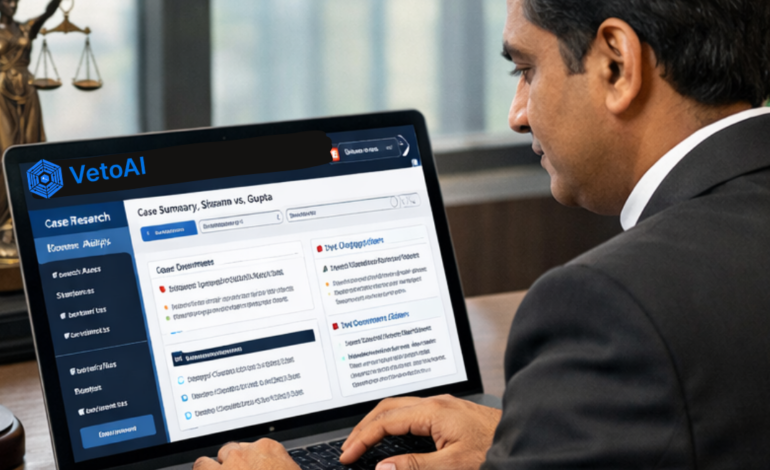
From company filings and taxation to employment laws, contracts, privacy standards, and investor due diligence, compliance can quickly become overwhelming—especially for startups operating with small teams and limited resources. This is where artificial intelligence is making a meaningful difference. Solutions such as VetoAI are helping startups move beyond outdated manual processes and toward smarter, more efficient compliance management.
Table of Contents
ToggleThe Problem With Traditional Compliance Methods
Many startups still rely on spreadsheets, reminders, shared folders, and scattered documents to manage compliance tasks. While this may work in the early stages, it becomes risky as businesses scale.
Common challenges include:
- Missed filing deadlines
- Outdated policy documents
- Poor visibility into pending obligations
- Difficulty managing rules across multiple states
- Last-minute panic during audits or fundraising rounds
Even minor oversights can lead to penalties, operational delays, or reputational damage.
How AI Improves Compliance Operations
Artificial intelligence brings structure, automation, and continuous monitoring into legal operations. Instead of depending entirely on manual follow-ups, AI systems can organize tasks, track deadlines, review records, and identify risks early.
Platforms like VetoAI help startups transform compliance from a reactive burden into a proactive business function.
Smarter Obligation Mapping
Every startup has different compliance requirements depending on factors such as:
- Industry sector
- Company structure
- Revenue size
- Employee count
- Geographic presence
- Customer data usage
For example, a fintech startup may require stronger KYC and regulatory controls, while a SaaS company handling user information may need tighter privacy processes.
AI can analyze a company’s profile and generate tailored compliance checklists, helping founders focus on what is relevant instead of researching every rule manually.
Better Deadline Management
Startups juggle recurring responsibilities such as:
- GST returns
- ROC filings
- Board resolutions
- Payroll compliance
- License renewals
- Investor reporting
Missing one deadline can trigger further complications. AI tools centralize these obligations, send alerts, escalate urgent issues, and create dashboards for leadership teams.
This ensures tasks remain visible and accountable rather than buried inside email threads.
Faster Contract Review
Startups sign multiple agreements during growth, including:
- Vendor contracts
- Employment agreements
- NDAs
- Lease documents
- Customer terms
- Partnership deals
- Funding paperwork
Many founders rely on templates without fully understanding hidden risks. AI-assisted review tools can scan contracts and flag issues such as:
- Unlimited liability clauses
- Weak termination rights
- One-sided indemnities
- Poor confidentiality terms
- Missing dispute resolution language
This provides an important first layer of review before legal escalation becomes necessary.
Simplifying Employment Compliance
As startups hire across cities and states, workforce compliance becomes more complex. Businesses must manage:
- Offer letters and onboarding records
- Contractor vs employee classification
- Leave policies
- Wage compliance
- Workplace policies
- Benefits documentation
AI can help HR teams maintain accurate records, identify missing documentation, and update policies efficiently.
Stronger Fundraising Readiness
During investment rounds, startups are often asked to provide:
- Corporate records
- Cap tables
- Board approvals
- IP ownership documents
- Employment agreements
- Litigation disclosures
- Compliance history
If these records are disorganized, due diligence slows down and investor confidence can weaken.
AI-powered systems can maintain digital data rooms, detect missing files, and keep records updated throughout the year rather than only during fundraising.
Monitoring Regulatory Changes
Indian regulations continue to evolve across tax, labor, privacy, digital governance, and sector-specific laws. Manually tracking these updates can be expensive and inconsistent.
AI can monitor legal developments, summarize changes in simple language, and identify their likely impact on the business. This allows founders to stay informed without losing focus on growth.
Privacy and Cybersecurity Support
As startups collect more customer data, responsible governance becomes essential. Whether dealing with payments, health data, location information, or analytics, businesses must handle data carefully.
AI tools can assist with:
- Identifying sensitive data
- Reviewing privacy policies
- Assessing vendor risks
- Detecting compliance gaps
- Strengthening internal controls
This helps startups build trust early instead of treating privacy as a later-stage issue.
AI Is Not a Replacement for Lawyers
Although AI offers major efficiency gains, it cannot replace experienced legal professionals. Complex disputes, cross-border structuring, investment negotiations, and regulatory notices still require human judgment.
The most effective model combines both:
- AI for automation, monitoring, and first-level review
- Legal experts for strategy, negotiation, and nuanced interpretation
Cost-Effective Support for Startups
Many early-stage businesses cannot afford a full in-house legal team. At the same time, depending entirely on external counsel for routine matters can become expensive.
AI-driven platforms like VetoAI help bridge this gap by offering scalable legal operations support without heavy overhead costs.
Building a Compliance-First Culture
When compliance becomes easier to manage, startups stop treating it as a burden and start treating it as infrastructure. Strong governance improves:
- Investor confidence
- Enterprise sales readiness
- Vendor trust
- Operational resilience
- Long-term scalability
It also allows founders to focus on building products and growing revenue with fewer avoidable surprises.
Final Thoughts
India’s startup future will depend not only on innovation, but on responsible and well-governed innovation. As regulations become more detailed and business environments more complex, manual compliance systems will struggle to keep pace.
Artificial intelligence is changing how startups manage obligations, contracts, records, risks, and readiness. Platforms like VetoAI represent a new generation of tools helping founders stay compliant while moving fast.
For startups aiming to scale sustainably, AI-powered compliance is no longer a luxury—it is quickly becoming a strategic advantage.
⚠ Disclaimer:
This article is contributed by an independent author and is for informational purposes only. We do not guarantee its accuracy or completeness. The views expressed are those of the author and do not reflect this website. Readers should verify information independently and consult professionals where necessary.