
National Fire Service Week 2026: Are We Really Prepared or Just Going Through the Motions?
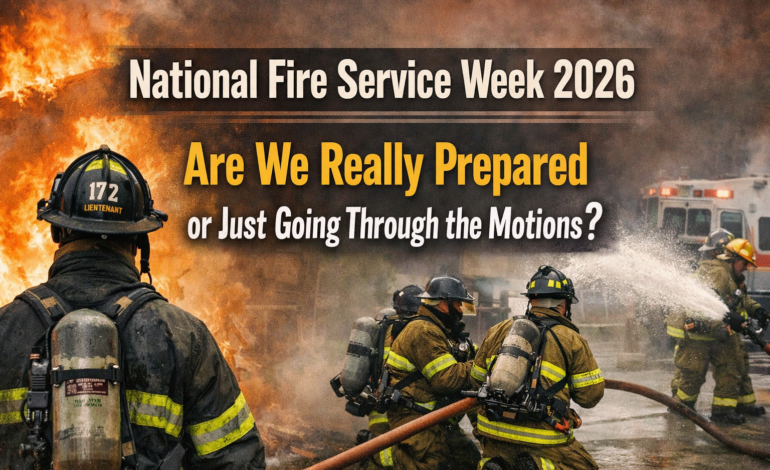

Every April, we see banners going up on factory gates. A fire drill gets announced. Someone finds the extinguisher behind the storage boxes, dusts it off, and places it where it’s visible – at least for that one week. And then April 21st arrives and everything quietly goes back to the way it was.
If this sounds familiar, you’re not alone. And this is exactly the conversation that National Fire Service Week 2026 wants us to have.
Observed every year from April 14 to April 20, fire service week in India is not just a government-mandated event. It is a reminder that fire safety is not a once-a-year checkbox – it is a year-round responsibility. And in 2026, that reminder feels more urgent than ever.
Why April 14? The Story Behind National Fire Service Day
Most people know April 14 as Dr. Ambedkar’s birth anniversary or the start of the new financial year. But in the safety world, it carries a very different weight.
On this date in 1944, the SS Fort Stikine – a British cargo ship docked at Victoria Dock in Bombay – caught fire. The ship was carrying raw cotton, gold bars, and nearly 1,400 tonnes of explosives. What followed was two massive blasts that ripped through the entire dock.
The numbers are staggering even today: over 740 lives lost, close to 1,800 injured, 27 vessels sunk, and nearly 50,000 workers left without livelihoods overnight. The firefighters who ran towards that fire, knowing what was inside – did not come back. Their courage is why the Standing Fire Advisory Council declared April 14 as National Fire Service Day. Since 1995, fire service week has been observed in their memory, and in their honour.
A two-minute silence is still held on the morning of April 14 at workplaces across India. It is a small gesture, but the intent behind it is big.
Numbers That Should Make Every Workplace Uncomfortable
Here’s a question: when did your workplace last have a proper fire safety audit? Not just a drill – an actual inspection of your equipment, exits, and emergency response plan?
According to NCRB data shared in the Lok Sabha, India recorded 7,054 fire accidents in recent years, killing 6,891 people and injuring 284 more. That averages to nearly 19 fire deaths every single day.
A large chunk of these were preventable. Faulty wiring. Blocked exits. Extinguishers that had not been checked in years. No training. No practice. No plan.
This is why fire service week 2026 matters – not as a formality, but as a genuine wake-up call.
Fire Service Week Theme 2026: What It Stands For?
Each year, the Directorate General of Fire Services, Civil Defence, and Home Guards (DGFSCDHG) announces an official fire service week theme that sets the tone for awareness campaigns, training activities, and community programs across the country.
A look at how themes have evolved tells us a lot about where the focus has been:
|
Year |
Theme |
|
2025 |
Unite to Ignite, a Fire Safe India: Contribute towards Nation Building |
|
2024 |
Ensure Fire Safety, Contribute towards Nation Building |
|
2023 |
Awareness in Fire Safety for Growth of National Infrastructure (AGNI) |
|
2022 |
Learn Fire Safety, Increase Productivity |
|
2021 |
Maintenance of Fire Safety Equipment is Key to Mitigating Fire Hazards |
The official 2026 theme will be announced closer to April by the DGFSCDHG. But regardless of the specific wording, the core message stays the same: fire safety is everyone’s responsibility, not just the fire department’s.
What Does a Good Fire Service Week Actually Look Like?
Too many organizations treat this week as a PR exercise. A few photos for the company newsletter, a safety banner at the entrance, and a 10-minute drill that everyone sees coming three days in advance.
The organizations that actually get value out of national fire service week in India do things differently. Here’s what meaningful participation actually looks like:
- Unannounced evacuation drills: These reveal your real emergency response gaps – not the polished version you’d want your safety officer to see.
- Live extinguisher training: Most employees have never actually operated a fire extinguisher. Watching a demo is very different from doing it under simulated pressure.
- Equipment audits: Check every extinguisher, alarm, sprinkler head, and emergency light. If something is expired, blocked, or broken, fix it before the week ends.
- Hazard identification walks: Walk your facility with fresh eyes. Look for overloaded sockets, improperly stored chemicals, blocked fire exits, and missing signage.
- Engaging talks and competitions: Poster, slogan, and essay competitions for staff and students bring awareness in a way that safety notices on noticeboards never do.
Fire Safety Tips That Actually Stick
There is no shortage of fire safety tips on the internet. The problem is that most people read them, nod, and forget them by Tuesday. The ones that stick are the ones tied to actual habits and real-world context.
Here are a few that genuinely reduce risk:
- Never block fire extinguishers with stored material. If it takes more than 5 seconds to reach one, it might as well not exist.
- Treat a tripped circuit breaker as a warning, not an inconvenience. Repeatedly resetting it without finding out why is how fires start.
- Flammable materials need proper storage. A corner of the stock room is not a proper location for chemicals or industrial solvents.
- Hot work – welding, cutting, grinding needs a permit every single time. Not just for big projects. Every time.
- Emergency exits must be clear 365 days a year. Not just during inspections or fire service week.
- Know your fire station’s number. Save it. Teach everyone in your team to save it.
The Real Gap in Indian Workplaces
The problem in most Indian workplaces is not the absence of safety equipment, it’s the absence of practice. You can have the best fire suppression system installed, but if your team has never practiced an evacuation, panic will override everything.
Disaster preparedness training is not about memorizing a procedure. It’s about building muscle memory so that the right decisions happen automatically when there’s smoke, noise, and confusion.
Role of Professional Safety Training in Making Fire Service Week Count
A drill conducted by someone who has never been trained in emergency response can actually create more confusion than it resolves. This is where partnering with a professional safety training company makes a real difference.
Good fire safety training does several things that a self-run drill cannot:
- It is tailored to your actual facility layout, not a generic template.
- It includes hands-on practice with real equipment under supervised conditions.
- It identifies specific risk zones in your workplace that you may have overlooked.
- It prepares your emergency response team for multiple scenarios, not just a single fire drill.
- It gives you documented records that matter for compliance and audits.
Organizations like Safety Circle India have spent over two decades working with factories, hospitals, educational institutions, and Fortune 500 companies across India to build fire safety cultures that go far beyond the annual drill. Their programs for fire service week in India include evacuation drills, live extinguisher handling, fire safety audits, and customized disaster preparedness training – all designed around the specific realities of your workplace.
Who Should Observe Fire Service Week and How?
Short answer: everyone. But the specifics depend on your context.
Factories and Industrial Units
You face the highest fire risk. Your week should include equipment audits, hot-work permit reviews, a full evacuation drill, and a briefing on material storage practices. If you haven’t invited your local fire brigade for an inspection visit, this is the week to do it.
Offices and Commercial Buildings
Offices often feel ‘safe’ because there’s no heavy machinery or chemicals. But overloaded power strips, server room heat, and unplanned kitchen areas are very real risks. Run a drill. Check your extinguishers. Make sure every employee can locate the nearest exit without looking at a sign.
Schools and Colleges
Students learn best through participation in their Education area. Poster and essay competitions on national fire service week themes, followed by a live fire extinguisher demo, can leave a lasting impression. The safety habits students develop in school often stay with them for life.
Hospitals and Healthcare Facilities
Fire evacuation in a hospital is uniquely complex, patients cannot always move on their own. Your fire service day drills need to specifically account for ICU patients, bed-ridden individuals, and the need to maintain sterile Health environments during evacuation. Generic drills simply don’t cut it here.
From Fire Service Week to a Year-Round Safety Culture
This is the part most organizations miss. The goal of fire service week 2026 is not to be the best version of your fire safety program. It’s to be the starting point for a continuous one.
If you run a great drill this April but do nothing until April 2027, you’ve mostly just done a very public press rehearsal.
What a year-round fire safety culture actually looks like:
- Monthly checks on all extinguishers, alarms, and emergency lights.
- Quarterly fire safety briefings for new and existing staff.
- At least two unannounced drills per year, not just in April.
- A clear, practiced emergency response plan not just a laminated poster.
- An open-door relationship with your nearest fire station.
Final Word: One Week Can Change a Lot – If You Let It
The firefighters who rushed into the Bombay Dock fire in 1944 didn’t have the luxury of being underprepared. They went in anyway. We can at least honor that courage by making sure the people in our workplaces, schools, and communities know what to do when a fire breaks out and have actually practiced it.
National Fire Service Week 2026 runs from April 14 to 20.
You have the dates.
You have the context.
What you do with that is up to you.
If you want to make this year’s fire service week more than a calendar event, Safety Circle India can help you plan it the right way – from evacuation drills and live training to full fire safety audits. As a leading safety training company in India, their programs are built for real workplaces, not just compliance forms.
⚠ Disclaimer:
This article is contributed by an independent author and is for informational purposes only. We do not guarantee its accuracy or completeness. The views expressed are those of the author and do not reflect this website. Readers should verify information independently and consult professionals where necessary.